The planet that held.
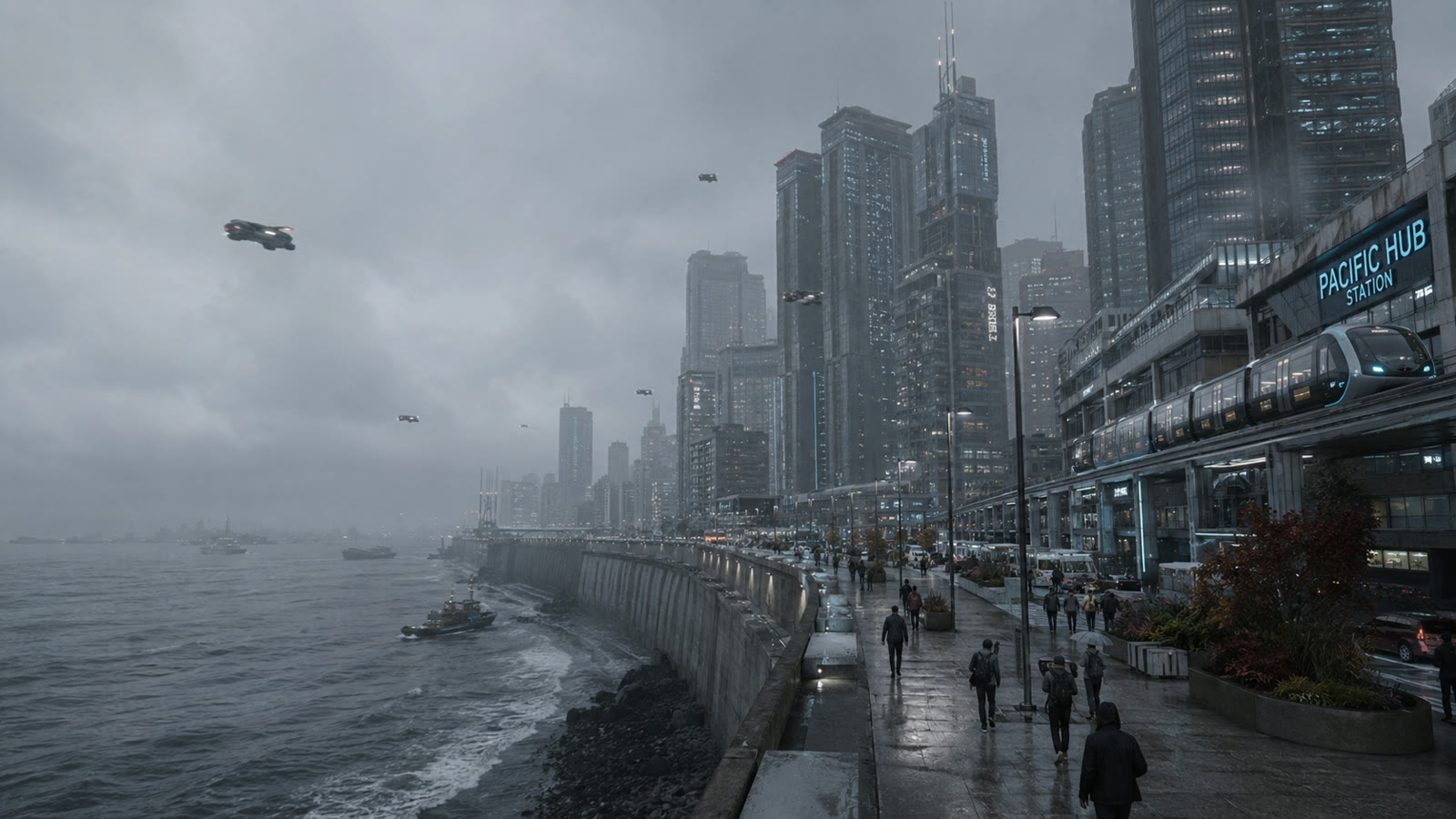
Start with what didn't happen: the world didn't end. It changed, expensively, and people changed with it. The seas sit two meters higher than they did a century ago. Coastal cities built walls, or moved uphill, or did some of each and argue about the bill. Across a band of the equator, the summer air gets too hot and too wet for the human body, and for weeks at a time nobody goes outside. Wheat grows in places it never used to. Dinner is mostly cultured now; a tomato from actual soil is a gift you bring to someone you love.
What made it survivable was power. Fusion finally worked, decades ago, and stayed working. Energy stopped being the limit, and with enough of it you can desalinate, refrigerate, rebuild, grow food indoors, and keep a damaged planet running. Cities are hardened and green-walled, water-managed, transit-heavy, quieter than you'd expect. People still grieve, fall in love, pay bills, watch vlogs. Daily life in 2098 looks less like a disaster film and more like a long convalescence.
And convalescents look out of windows. Once the lights stayed on, humanity raised its eyes again — not in panic, but with a question it could finally afford to ask seriously. The century that nearly cost Earth its future is the same century that built the ship to go looking for a second one.
The agency that builds for distance.
Deep space is too expensive for any one nation, so nobody owns it. The Federation Deep Space Service — the FDSS, the blocs' shared agency for everything beyond Mars — was formed when the old national space programs grew too small for the distances involved. The Service runs the lunar yards and the Mars routes, and for most of its existence that was the whole job: steady, careful, close to home.
Then warp flight became real. Not the warp of older fiction — no jumps, no shortcuts. A warp transit is measured in weeks and months, it costs a fortune, and only a handful of vessels have ever carried the drive. Faster than light, yes. Fast, no. The galaxy did not suddenly become small. It became, for the first time, merely enormous.
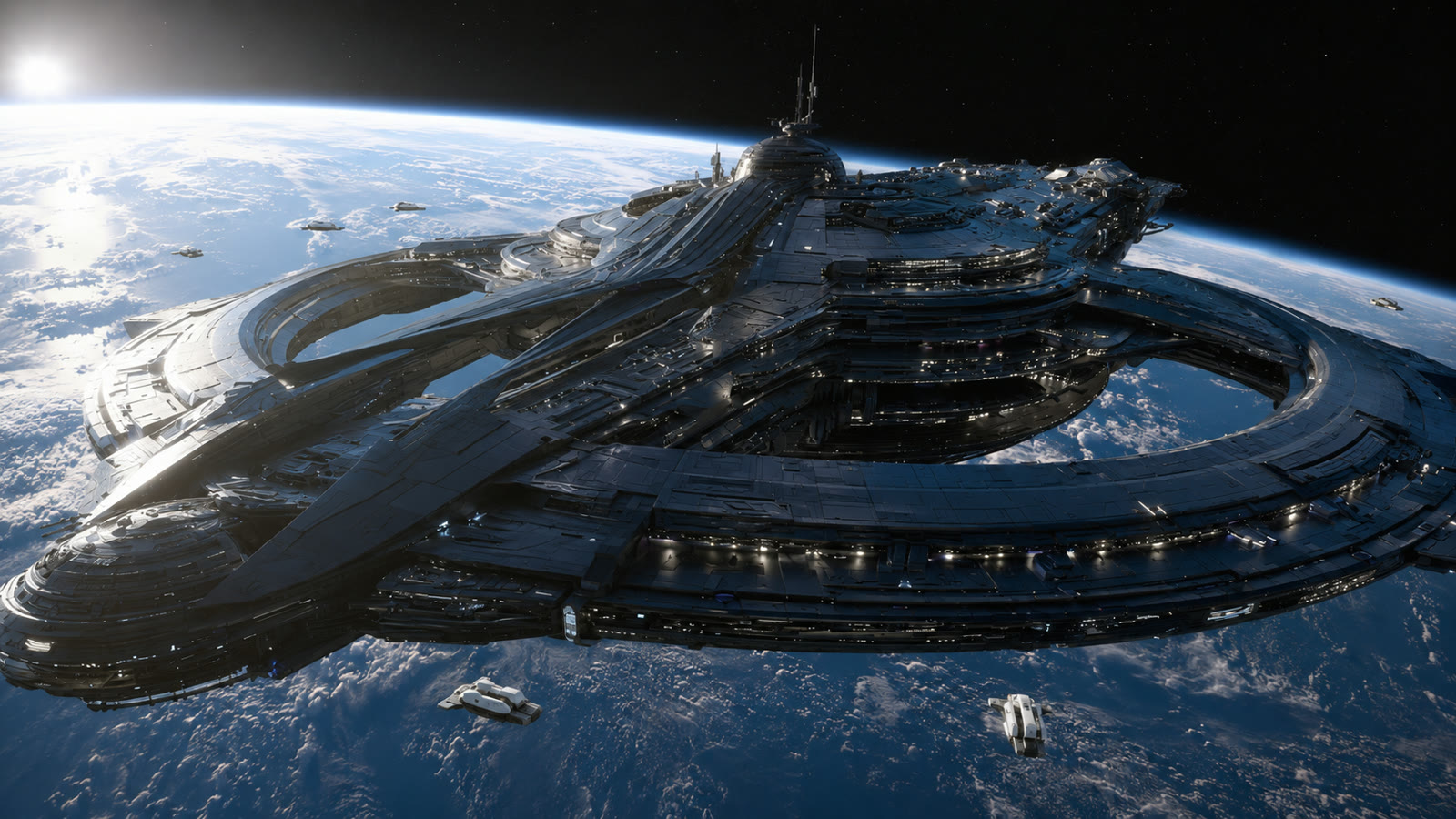
The Pathfinder is what the Service built with that opening: its first true deep-space ship, the largest single object human beings have ever made, assembled in orbit because nothing that size will ever touch ground. Even pooled across the blocs and the great private firms of the era — MERIDIAN among them — the money wasn't enough. So the Service sold berths. Four hundred of them, to civilians wealthy enough to buy a place on the most important voyage in history. The crew calls them sponsors. Earth is still arguing about whether it was a masterstroke or a scandal, and the honest answer is that without them, the ship doesn't fly.
Proxima Centauri b.
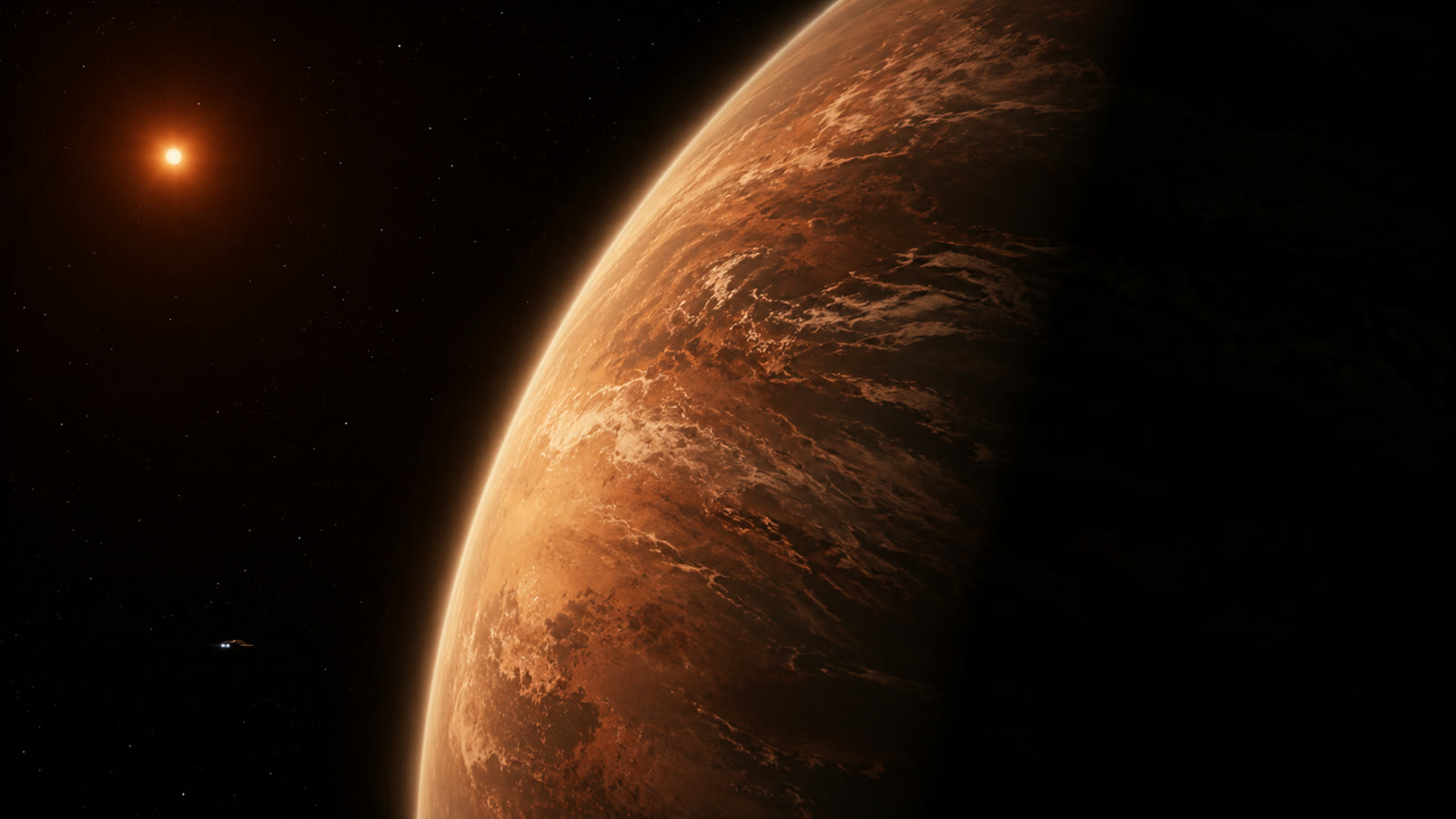
The nearest star to the sun has a planet, and we have been staring at it for over a century. Proxima Centauri b is about four light-years out — next door, by the measure of the galaxy; unimaginably far, by any measure a body understands. It is dry, cold, thin-aired, and it keeps one face forever turned to its star. Along the line where its permanent day meets its permanent night, there may be a band where, with a few centuries of patient work, people could live.
That word — may — is the mission. The Pathfinder goes there to replace it with a yes or a no. Go, enter orbit, survey the planet from above and below, begin the first terraforming groundwork, and report back whether humanity has a second address. Not a colony ship. A question, asked in person.
Even at warp, the voyage spans years. The crew won't live most of them. They cross the distance in three long legs of cryosleep — months and years of dreamless suspension between stretches of working life — and wake up, each time, further from home than anyone has ever been. The mission asks them to spend a piece of their lives in transit so that everyone else can know the answer.
No one will call home again.
Here is the fact the whole show rests on. Ships can outrun light now. Messages cannot. There is no faster-than-light communication — not classified, not experimental, not for anyone. Every word sent home from the Pathfinder crawls back at lightspeed, and the delay only grows: hours at first, then days, then weeks. A question and its answer can be separated by years.
Sit with what that means. Nobody on that ship will ever again have a live conversation with anyone on Earth — not until the day they return, if they return. No calls. No someone picking up. Only recordings, sent into the dark, and recordings that come back long after the moment that made them has passed. A mother answers a message from a daughter who has already been asleep for a year. The crew receive their mail in batches, and a batch arriving is the best day of the week.
You cannot talk to Earth. You can only tell it things, and hope.
This is why, of the 84,522 people aboard, some fifty keep channels. They record their days and send them home, knowing every reply is already out of date. And it is why one engineering cadet's vlog — funny, unguarded, filmed in a cabin the size of a closet — matters more than the word "vlog" suggests. It isn't content. It is a record that someone was out here: what it looked like, what it cost, who she was while it happened.
The signal is on its way. It always was. You're watching it arrive.